






Start with nugget ice if chewing is the point, crescent ice for firm everyday drinks, bullet ice for quick and often portable batches, clear bullet ice for a more polished everyday look, and a large solid clear cube or sphere for slower dilution. Then check storage, water, drainage, cleaning, sound, and how much ice will actually be ready when you need it.
Listen to an audio explainer
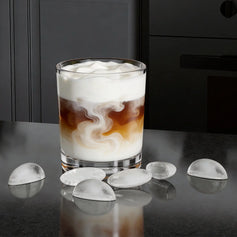
Set a glass of nugget ice beside one filled with crescent or bullet ice, and the difference is obvious before the drink is poured. One is soft enough to chew. Another is firm and structured. A third may be hollow and designed for quicker batches.
Nugget, crescent, bullet, cube, and sphere describe how ice is formed or shaped. “Clear” mainly describes appearance, so a clear piece can still be bullet-shaped, cubed, or spherical.
It took me longer than it should have to realize that most “best ice” comparisons mix together two different questions: What is the ice like in a drink, and what is the machine like to live with?
Both matter.
Which Ice Type Should You Choose?
| Priority | Start with | Know before choosing |
|---|---|---|
| Soft, chewable ice | Nugget ice | Its porous, compacted-flake texture is usually not the first choice for minimum dilution. |
| Firm everyday ice | Crescent ice | Versatile for common drinks; the shape does not tell you whether the machine needs a drain. |
| Quick, portable batches | Bullet ice | Common in countertop machines, although undercounter clear-bullet models also exist. |
| A clearer everyday presentation | Clear bullet ice | Clearer-looking does not mean nugget-soft or automatically slower-melting. |
| Slower dilution for slow-sipped drinks | Large solid clear cube or sphere | Less practical for chewing, blending, or rapid high-volume serving. |
There is no universal winner. The useful question is which tradeoff fits your drinks—and which machine routine you are willing to own.
What Makes Ice Melt, Chill and Feel Different?
Ice behavior comes down to more than clarity.
Under similar conditions, dividing the same total mass of ice into smaller pieces creates more exposed area. That can speed up heat transfer and dilution. One large solid piece of the same mass generally changes more gradually.
The starting temperature of the ice and drink, agitation, total ice quantity, and whether the piece is solid, hollow, or made from compressed flakes also matter. Hot coffee poured directly over ice will behave differently from coffee that has cooled first.
Texture follows structure. Compressed-flake nugget ice feels softer. Crescent, bullet, cube, and sphere ice feel firmer, although exact density and shape vary.
Visual clarity can improve presentation, but appearance alone does not establish water quality, chewability, or melt rate.

Which Ice Works Best for Each Drink or Occasion?
| Drink or occasion | Strong starting choice | Main tradeoff |
|---|---|---|
| Water, soda, and sparkling water | Crescent or bullet | Choose nugget when chewability matters more. |
| Iced coffee and tea | Crescent or clear bullet | Cool hot-brewed drinks first if dilution is the concern. |
| Highballs, mocktails, and mixed drinks | Crescent or clear bullet | Use one large solid piece for a slower-sipped serve. |
| Whiskey and spirit-forward cocktails | Large solid clear cube or sphere | Smaller pieces provide more initial ice-to-drink contact. |
| Chewing ice | Nugget | Bullet ice does not offer the same soft texture. |
| Family drinks and weekend hosting | Crescent or clear bullet | Ready inventory can matter more than shape. |
| Large or outdoor party | No single ice type solves capacity | Plan total demand, starting inventory, production time, and backup ice. |
For a gathering, the answer usually starts with capacity rather than shape. A machine can have an impressive 24-hour production rating and still hold much less ice at one time.
How Do Nugget, Crescent, Bullet and Large Clear Ice Compare?
1. Nugget Ice: When Texture Is the Point
Nugget ice is made from compacted ice flakes, creating a porous, chewable piece. GE Appliances uses the same compacted-flake description for its nugget ice.
It works well for people who snack on ice or prefer a softer texture in soda, lemonade, tea, or water. If chewability is the reason you are shopping, bullet ice is not an equivalent substitute.
The machine still deserves a separate look. Check cleaning access, descaling, water supply, sound, and whether finished ice stays frozen.
2. Crescent Ice: A Firm Everyday Choice
Crescent ice is curved and generally solid. It feels firm in the glass and works across water, soda, tea, coffee, and mixed drinks. Hoshizaki’s ice-type guide describes its crescent cube as an individual, solid piece.
Its melt rate is not universally “slow,” and the shape itself does not tell you whether the appliance is drainless. Those outcomes belong to the individual piece and machine.
Crescent ice is less about making a drink feel specialized and more about being useful across a normal week. For many homes, that may be the more relevant distinction.
3. What Is Bullet Ice—and How Is Clear Bullet Ice Different?
Bullet ice is rounded or cylindrical. A hollow or recessed center is common, although not every bullet product is identical. That center is usually part of the intended geometry rather than evidence that something went wrong.
Regular bullet ice is common in portable countertop machines. Many models are designed to deliver a relatively quick first batch, which is useful when portability and occasional use matter.
The expectation to check is storage. Many countertop baskets are insulated but do not keep ice frozen like a freezer, so unused ice may gradually melt and be recycled.
Clear bullet ice combines the bullet form with greater visual clarity. It offers a more polished look while remaining firm and structured—not nugget-soft and not automatically slow-melting.
4. Large Clear Cubes and Spheres: For Slow Sipping
For whiskey and spirit-forward cocktails, “clear ice” often means one large solid cube or sphere rather than a small everyday piece.
Under similar conditions, one large solid piece generally exposes less total surface area than the same mass divided into smaller pieces. That makes it a useful starting point when gradual dilution matters. Hoshizaki similarly positions its 1.8-inch solid sphere ice for slower-melting cocktail and spirit service.
The tradeoff is specialization. Large pieces are less practical when you want chewable ice, blending, portable batches, or a high volume of everyday drinks.
What Should You Check Before Buying an Ice Maker?
Choosing the ice is only half the decision. This is where many comparisons stop—and where buying mistakes tend to start.

1. Should You Choose a Countertop or Undercounter Ice Maker?
A countertop machine can work well for occasional use, smaller batches, portability, and spaces where permanent installation does not make sense. It also takes up counter space, may need manual refilling, and may use an insulated basket instead of frozen storage.
An undercounter machine creates a dedicated ice source and may offer more production and storage. It also needs a permanent location.
Before buying, check:
- Full product dimensions and required clearances
- Water supply
- Drainage method
- Ventilation
- Electrical requirements
- Cleaning access
- Expected sound
- Door and service access
The machine that makes your preferred ice still has to fit the room and the household using it.
2. How Much Ice Will Actually Be Ready?
Three numbers often appear together, but they do not mean the same thing:
- Daily production is how much ice a machine may make across 24 hours under stated test conditions.
- Storage capacity is how much the bin or basket can hold at one time.
- Ice ready now is what has accumulated after normal use, replacement cycles, and melting.
A high-output machine may hold much less than its daily production figure. Its storage bin may not behave like a household freezer either.
For regular entertaining, ask how early the machine needs to run, how much ice can accumulate, and how quickly it can replace what people take.
3. Does Ice Shape Determine Drainage or Maintenance?
No. Crescent does not automatically mean drainless, bullet does not always mean countertop, and undercounter does not always mean gravity drainage.
Depending on the model, an ice maker may use gravity drainage, a drain pump, or no external drain line. Water supply, cleaning, ventilation, electricity, and clearance requirements also vary.
Choose Your Next Step
Check the current product page and user manual for the exact model rather than carrying an assumption from one ice shape to another.
- Want soft ice to chew? Stay with nugget ice. Crescent and bullet ice will not provide the same texture.
- Want slower dilution for whiskey or a slow-sipped cocktail? Start with a large solid cube or sphere.
- Want quick portable batches? Compare countertop bullet machines, paying close attention to basket storage and refilling.
- Want clear bullet ice? Decide whether you want a countertop routine or a permanent undercounter setup before comparing models.
- Want firm crescent ice without running an external drain line? Explore COTLIN drainless undercounter crescent ice makers, then verify the dimensions, water, electrical, and ventilation requirements of the individual model.
This is product matching, not a ranking. Sometimes the honest answer is another ice category—or no dedicated ice maker at all. That is still a useful answer.
Final Thoughts
Start with the experience you want in the glass: soft, firm, quick-chilling, clear-looking, or slow-diluting.
Then look at the appliance behind it.
The right choice is the ice-and-machine combination that fits your drinks, available space, and the amount of installation and maintenance your household actually wants to support.
FAQs
1. Is Clear Ice a Separate Ice Shape?
No. Clear mainly describes appearance. Bullet, crescent, cube, and sphere describe shape or structure, so clear ice can take several forms.
2. Does Clear Ice Always Melt More Slowly?
No. Size, total mass, exposed surface area, starting temperature, agitation, and solid or hollow structure all affect melting. A large solid clear piece may melt more gradually, but clarity alone is not the reason.
3. What Is the Difference Between Nugget Ice and Bullet Ice?
Nugget ice is made from compacted flakes and feels softer and more porous. Bullet ice is firmer and commonly has a hollow or recessed center.
4. Does Every Undercounter Ice Maker Need a Drain?
No. Some models use gravity drainage, some include a drain pump, and some do not require an external drain line. Confirm the requirements for the exact model.
5. Does an Ice Maker’s Storage Bin Keep Ice Frozen?
Not always. Many bins and baskets are insulated rather than refrigerated. Some melting can be normal, so check how the model stores ice and manages meltwater.

