






Your ice maker is a 4-step robot that uses heat to release ice.
- Fill — A solenoid valve opens for 7–10 seconds (±0.5s) to fill each mold with ~0.5–0.7 oz of water
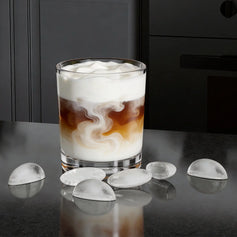
- Freeze — 90–120 minutes at 5°F. Air and minerals get trapped in the center → that's why home ice is cloudy. Not dirty. Just physics.
- Heat — A hidden heating coil activates for 45–90 seconds to create a micro-thin water film between ice and mold. Yes, your ice maker gets hot to make things cold.
-
Eject — A mechanical claw (ejector blade) sweeps the now-loose cubes into the bin. That 3 AM THUD? That's it.

And here's the kicker: to create ice, this machine must first get hot.

How Does an Ice Maker Work? The 4-Step Process
Step 1: The Precise Water Fill (0–10 Seconds)
- Solenoid Valve: An electrically controlled valve that opens and closes based on magnetic coil activation—think of it as a robotic tap that never gets tired or drunk.
- This is engineering poetry: a $3 valve controlling water flow with better consistency than most humans can pour coffee.
Step 2: The Freezing Process
Why is your freezer ice cloudy while bar ice is crystal clear?
Step 3: Why Does My Ice Maker Get Hot? (The Heating Element Explained)
Here's where the magic—and the paradox—happens.
Your ice is now frozen solid at around 5°F. It's gripping those aluminum molds like a frozen hand on a metal flagpole in winter. How do you get it out? Prying would break the mechanism. Twisting would crack the molds. So engineers did something counterintuitive:
They installed a heating element underneath the ice.
Buried beneath the aluminum mold sits a thin heating coil, similar to a car's defrost system. After 90–120 minutes, when the ice is fully frozen, a timer or thermostat (depending on your model) triggers the heater for 45–90 seconds. Not enough to melt the ice—just enough to create a microscopic water film between ice and mold.
Think of it like greasing a pan before flipping a pancake. That thin liquid layer acts as a lubricant, breaking the molecular grip between frozen water and metal.
The Ice Maker Paradox: To give you cold, the machine must first embrace heat.
This is why, if you press your hand against an ice maker mid-cycle, you might feel warmth. You're not imagining things. You're touching the moment where hot and cold shake hands.
Step 4: The Ice Ejection
With the ice now "lubricated," it's time for the finale: ejection.
A white plastic arm—officially called the ejector blade, but it looks more like a tiny rake—begins rotating. Powered by a small motor, it sweeps across the mold surface, pushing each cube over the edge into the storage bin below.
THUD. That's the sound of 8–12 ice cubes hitting plastic. If you've ever been startled awake at 3 AM by this noise, now you know: your ice maker just completed a 2-hour manufacturing cycle, and it's damn proud of it.
The ejector arm doesn't just push—it times its sweep to coincide with maximum slip from the heating phase. Too early, and the ice sticks. Too late, and partial melting ruins the cube shape. It's a choreographed dance between heat, motion, and gravity.
Why Is My Ice Cube Cloudy?
Once you understand the machinery, you start to see why not all ice looks the same.
The Cloudy Ice Reality
Your standard refrigerator makes crescent-shaped ice—those little half-moons that look like orange slices. They freeze quickly from all directions, trapping air bubbles and minerals in the center. This creates that characteristic white, cloudy appearance.
Is cloudy ice safe? Absolutely. The cloudiness comes from trapped air and naturally occurring minerals (calcium, magnesium) in your tap water—not contamination. It's physics, not hygiene.
- Pros: Fast production, reliable mechanism, doesn't jam.
- Cons: Melts quickly (high surface area), dilutes drinks faster.
The Clear Ice Upgrade (Commercial & Premium Makers)
Think of it as the difference between fast-food ice and craft cocktail ice. Both get the job done, but one elevates the experience.
What Is Nugget Ice? (Sonic Ice / Chewable Ice Explained)
And then there's the phenomenon sweeping social media: nugget ice, also called "Sonic ice," "chewable ice," "pebble ice," or simply "the good ice."
The Fundamental Difference: It's Not Frozen—It's Compressed
Here's what makes nugget ice special: it's not a solid block of frozen water. Instead, nugget ice machines:
- Shave ice into fine flakes (like snow)
- Compress those flakes under high pressure into soft pellets
- Extrude the compressed ice through a tube, creating cylindrical nuggets
The result? Ice riddled with microscopic air pockets, which creates two unique properties: Flavor Absorption—those tiny holes soak up whatever liquid surrounds them—Coke, sweet tea, lemonade.
You're not just getting cold, you're getting flavored cold. And Chewability—the texture is crunchy but yielding, satisfying the primal urge to crunch ice without breaking your molars.
Why People Are Obsessed
Search trends tell the story: queries for "nugget ice maker" have tripled over the past five years, and #NuggetIce has accumulated hundreds of millions of views on TikTok. People aren't just buying a machine—they're joining a cult.
What people actually want: Not just cold. Edible cold.
Final thought
In a world obsessed with smart fridges and touchscreen displays, the humble ice maker remains a masterclass in elegant engineering—a machine that solves a problem so well, we forget it's solving anything at all. Until 2 AM. When it reminds us with a THUD.


