



-
The crescent shape wasn't designed for looks — it was engineered to solve the physics problem of ice expanding as it freezes, which destroyed every square-mold machine before it.
- Water flows down a curved stainless steel plate, freezes in layers, and slides off with a single heat pulse — no mechanical force, which is why these machines last 10–15 years.
- Restaurants love crescent ice because its nesting geometry displaces more liquid per cup, quietly improving margins without customers noticing.
- The curved surface uses the Coanda effect to guide liquid smoothly into the glass instead of splashing, and point-contact storage keeps ice loose in the bin all day.
- Not all crescent ice is equal — the rounder, fuller shape is denser, harder, and melts significantly slower than the flat half-moon variety.
- Clear crescent ice outlasts cloudy freezer ice in a drink by 30–45 minutes because flowing water during production flushes out the trapped air that creates weak points.
Listen to an audio explainer
Most people who love crescent ice can tell you exactly what it feels like — that satisfying resistance when your teeth close in, the way it holds its shape in a drink without disappearing on you. What most people can't tell you is why it's shaped that way in the first place.
Here's the thing: the crescent shape isn't a design choice. It's an engineering solution to a problem that was breaking machines for decades.
The Problem That Killed Early Ice Machines
Before 1953, "automatic ice maker" was mostly a fantasy. Companies kept trying to build fully hands-free machines, and they kept failing. The culprit wasn't the refrigeration — that was solved. The real problem was getting the ice out without destroying the machine.
Water is weird. It's one of the only substances on Earth that expands when it freezes — about 9% by volume. If you freeze water inside a square grid mold (like a traditional ice cube tray, just mechanically), that expanding ice wedges itself into every corner and right angle. To eject it automatically, you'd need enough mechanical force to crack the mold, burn out a motor, or both. Early machines tried electric heating elements, hydraulic pistons, all kinds of brute-force approaches. None of them lasted.
Then engineers at Servel figured out something elegant: what if the mold doesn't have any corners?
A curved surface — a half-circle channel on a vertical stainless steel plate — gives expanding ice somewhere to go. Instead of locking into a 90-degree corner, the ice pushes outward along the curve. When the machine pulses a tiny bit of heat through the plate, the ice releases on its own. No torque. No force. Just physics doing what physics does.
That's why crescent ice looks like a crescent. Not because someone decided it would look nice. Because a curved surface was the only geometry that let machines run reliably for years without tearing themselves apart.

How a Crescent Ice Maker Actually Makes Ice
Once you understand the problem, the machine makes total sense.
Water gets pumped up and flows in a thin sheet down a vertical stainless steel plate. The refrigerant circulating inside the plate is pulling heat out continuously. As the water trickles down, it freezes layer by layer against the curved surface — slow, controlled, building up from the bottom of each arc.
When the ice reaches the right thickness, the machine triggers a short heat cycle. The plate warms just enough to release the bond between ice and metal. The crescent shapes slide off cleanly, fall into the storage bin below, and the whole cycle starts again.
The stainless steel plate is the real story here. No moving molds. No complex ejection mechanisms. The same plate does the job for a decade or longer. Compare that to cube ice machines, which use intricate nickel-plated copper grids — those coatings eventually chip, the grids warp under thermal stress, and you're calling a service tech. The vertical plate design is, mechanically speaking, almost bulletproof.

Why Restaurants Are Quietly Obsessed With Crescent Ice
Restaurant operators don't get sentimental about ice. They get sentimental about margins.
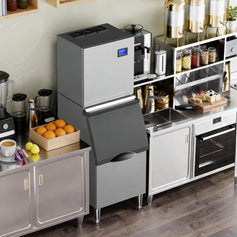
Here's the math that makes crescent ice interesting in commercial settings: the curved shape means crescent pieces don't stack the way cube ice does. Cubes sit flat against each other, creating big air pockets between them. Crescent ice nestles — one piece's arc fits against another's flat side, against the round interior of the glass. The result is better packing density. More ice per cup.
More ice per cup means less room for the actual drink. Less drink means lower ingredient cost per serving. This isn't a small effect — high-volume operations that switch from cube to crescent ice see measurable reductions in syrup and juice usage without customers noticing any difference in how full their cup looks. The cup is full. It's just full of ice.
That sounds cynical, and honestly, it kind of is. But crescent ice has real physics going for it too.
The curved surface eliminates splash. When you pour a liquid onto a flat ice cube, it hits a perpendicular surface and spray goes everywhere. Pour onto crescent ice and the liquid follows the curve down — what fluid dynamics people call the Coanda effect. For bartenders, this means cleaner pours. For anyone filling a cup at a self-serve station, it means the drink actually ends up in the cup.
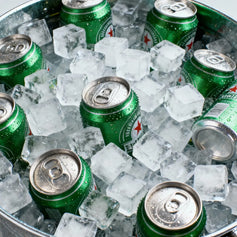
In storage, crescent ice stays loose. Cube ice in a bin will partially melt at the contact points between pieces and re-freeze overnight, fusing into a solid block you need a hammer to break apart. Crescent pieces only touch at tiny points along their curves. They stay dry, separate, and ready to scoop even after sitting in the bin all day.

What Crescent Ice Actually Feels Like in Your Glass
The chew is real. Crescent ice is dense and solid, but the shape means your teeth engage at an angle rather than head-on. It has a specific kind of give to it — not the chalky crumble of bad ice, not the impenetrable resistance of a full ice cube. If you've been looking for the right words to describe why crescent ice is satisfying to chew, that's the geometry working on you.
The melt rate matters too. Because crescent ice has a moderate surface-to-volume ratio — more surface area than a sphere (which melts too slowly), less than crushed ice (which melts immediately) — it cools your drink quickly on contact and then slows down. A crescent ice machine producing clear, hard ice will keep your coffee cold for 30 to 45 minutes longer than the cloudy, air-bubble-filled ice that comes out of most basic freezer compartments.
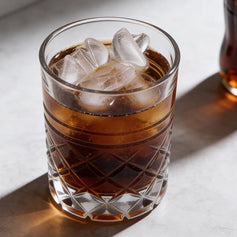
Clear ice, by the way, is a byproduct of the way these machines work. The flowing water during the freezing process carries dissolved minerals and trapped air out of the ice before they can get locked in. The result is ice that's denser, harder, slower to melt, and visually cleaner. It makes a noticeable difference in something like a glass of whiskey or cold brew, where dilution actually changes the flavor.

Not All Crescent Ice Looks the Same — Here's What Actually Matters
You've probably noticed that "crescent ice" isn't one consistent shape. Some machines make a flat, thin half-moon — the classic D-shape, almost like a coin sliced in half. Others make something fuller, rounder, more like what you'd actually call a crescent moon — a thick, gently curved shape with weight to it.
The difference comes down to how the machine grows its ice.
Thinner, flatter crescents come from shorter freeze cycles or shallower arc molds. The ice builds up, but not far from the plate surface. What you get is structurally more fragile — it chips easily, melts faster, and doesn't have the density that makes crescent ice satisfying in the first place.
The fuller, rounder crescent shape — sometimes called a full crescent or bull nose crescent — is the result of longer freeze cycles on a deeper arc mold. The ice grows further from the plate, building up real mass. The edges curve back on themselves rather than ending abruptly. This shape is heavier, harder, and noticeably different in the hand.
It also survives in a glass differently. A flat half-moon has two relatively large flat faces that sit against the glass interior. More surface contact means faster melting. The rounded crescent's curved geometry limits how much of its surface touches anything else — the glass wall, other pieces of ice, your teeth. That's why you feel the difference even if you can't quite articulate it.
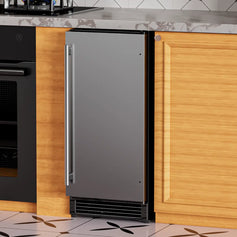
The COTLIN IMC25 Undercounter Crescent Ice Maker produces the rounder, fuller crescent shape. At the scale of a dedicated undercounter machine — the ice actually stays clear, and the chew is actually the thing crescent ice fans are after.
FAQs
1. Is crescent ice the same as half moon ice?
The terms are often used interchangeably, but there's a real distinction. Half moon ice refers specifically to the flatter, thinner D-shaped variety. Crescent ice — in the fuller sense — has more depth and curvature.
2. Is crescent ice good for chewing?
It's one of the better shapes for chewing. The curved geometry means your teeth engage the ice at an angle, which requires less force and produces a more satisfying result than biting straight into a flat cube.
3. How long does crescent ice last in a drink?
Significantly longer than crushed ice or standard freezer ice. A clear, dense crescent piece in a room-temperature drink will typically last 30 to 60 minutes before fully melting, depending on ambient temperature and drink volume.


