




-
At 21°F, a beverage cooler takes drinks into the space between fridge-cold and freezer-forgotten.
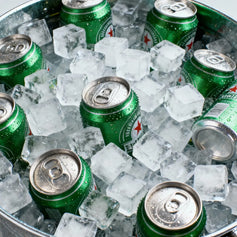
- Soda can taste sharper and sometimes move toward a near-slushy edge; light beer can feel intensely cold and crisp.
- But 21°F is close enough to freezing that sealed carbonated cans need timing, placement, and attention — it is a controlled ultra-cold setting, not careless overnight storage.
Listen to the article
Most of us already know the freezer trick.
You put a Coke or a beer in for “just a few minutes.” Then someone calls you outside, the grill needs attention, the game starts, or you simply forget.
- Sometimes nothing happens.
- Sometimes the drink is perfect.
- Sometimes the can bulges, leaks, freezes, or turns into a sticky mistake.
That is the problem 21°F tries to solve — not by freezing the drink, but by giving it a colder place to stop before the freezer turns it into a gamble.
Most beverage coolers organize your cans.
A 21°F beverage cooler does something different.
It changes the temperature experience.
-
It is colder than fridge-cold.
-
It is not the same as freezer-forgotten.
- It lives in the narrow, useful space between the two.
That edge is why 21°F is interesting.
It is also why it needs to be understood before you use it like a normal drink fridge.

21°F Is Not Just “Extra Cold”
A regular refrigerator is built for everyday cold storage.
A freezer is built to freeze.
A 21°F beverage cooler sits between those two ideas.
That is what makes it useful for people who want drinks noticeably colder than a standard fridge can make them. It is also why you should not treat 21°F like a normal storage setting for every beverage.
The number matters because 21°F is below the freezing point of pure water.
But soda, beer, sparkling water, canned cocktails, and energy drinks are not pure water.
They contain different combinations of:
- Sugar
- Sweeteners
- Alcohol
- Carbonation
- Acids
- Flavorings
- Dissolved gases
- Different container types
That means they do not all behave the same way at 21°F.
-
Some may get extremely cold and still pour normally.
-
Some may start forming ice crystals.
-
Some may lose carbonation if mishandled.
- Some may freeze, expand, leak, or burst if left too long.
The appeal and the caution come from the same place: 21°F is close to the freezing edge.
Refrigerator vs Beverage Cooler vs Freezer vs 21°F Ultra-Cold Cooler
Here is the easiest way to think about the difference.
| Appliance | Typical Role | What It Does Well | Limitation |
|---|---|---|---|
| Refrigerator | Everyday cold storage | Keeps food and drinks safely chilled | Drinks may not feel “ice-cold” |
| Standard beverage cooler | Organizes and chills drinks | Keeps cans visible, accessible, and ready | Many feel closer to fridge-cold than ultra-cold |
| Freezer | Freezing | Makes drinks cold fast if timed carefully | Easy to forget cans and freeze them |
| 21°F ultra-cold cooler | Near-freezing drink experience | Makes certain drinks feel dramatically colder | Requires attention to drink type, time, and placement |
Most beverage coolers are built around convenience: capacity, shelves, visibility, glass doors, and easy access.
A 21°F beverage cooler is more specific.
- It is for the person who has put a drink in the freezer because the regular fridge was not cold enough.
- It is for the person who wants a beer colder than the fridge makes it, especially after yard work, a hot garage afternoon, a game day, or a summer cookout.
- It is for the person who wants drinks close to the edge, but with more control than a freezer.
Why 21°F Is Rare in Home Beverage Coolers
Most home beverage coolers are designed for storage and organization.
-
They keep cans together.
-
They free up refrigerator space.
- They make a home bar, garage, or entertainment area feel more prepared.
But many standard beverage coolers do not aim for a near-freezing drink experience. Their job is usually to keep drinks chilled, not to push them close to the edge of freezing.
That is why 21°F stands out.
It is not just a lower number on a display. It changes the purpose of the appliance.
A typical beverage cooler asks:
Where should we store the drinks?
A 21°F ultra-cold cooler asks:
How cold do you want certain drinks to feel when you open them?
That difference matters.
If you only need basic drink storage, a standard beverage cooler may be enough.
But if you want Coke, sparkling water, light beer, or canned drinks to feel noticeably colder than a regular refrigerator can make them, 21°F becomes a different category of experience.
It is less about storing every drink forever.
It is more about creating a controlled ultra-cold serving zone.

Why 21°F Feels Different
The best part of 21°F is not just the number.
It is the edge.
When a drink gets much colder than regular refrigerator temperature, the experience changes in a few ways.
- First, the can itself feels colder in your hand. That changes the expectation before the first sip.
- Second, soda and sparkling drinks can taste sharper when they are very cold. The sweetness may feel slightly less heavy, while the cold and carbonation feel more direct.
- Third, some drinks may move toward a near-slushy texture if they get close enough to freezing without fully freezing solid.
That near-slushy edge is what makes ultra-cold drinks feel interesting.
But it is also unstable.
A drink can go from extra-cold to icy to frozen depending on the formula, time, placement, and how consistently cold the cooler is. Two cans may not behave exactly the same if one is near a colder airflow area and the other is farther away.
That is why 21°F should be treated as a setting you use with intention, not just a lower number you forget about.
Cold Fact: Colder Soda Can Taste Less Sweet
Very cold soda can feel sharper partly because temperature changes how strongly sweetness comes through.
The recipe did not change.
But when the drink gets colder, the sweetness may feel less heavy, while the cold bite and carbonation feel more noticeable.
That is one reason an ultra-cold soda can feel more refreshing than the same soda from a normal fridge.
Quick Guide: What Drinks Work Best at 21°F?
Use this as a quick scan before filling a 21°F beverage cooler.
| Drink | Good at 21°F? | Best Use | Watch Out For |
| Regular Coke / Pepsi | Yes, short-session | Extra-cold, sharper, possible near-slushy edge | Freezing if left too long |
| Diet / Zero Sugar Soda | Test carefully | Short chilling before drinking | Different formulas may behave differently |
| Light beer | Yes, short-session | Crisp summer beer, game day, garage | Not long-term storage |
| Lager / pilsner | Yes, carefully | Very cold serving moment | Flavor may feel muted if too cold |
| IPA / craft beer | Usually not ideal as default | Occasional quick chill | Aroma and flavor can be muted |
| Sparkling water | Yes, carefully | Extra-crisp first sip | Carbonation + freezing risk |
| Energy drink | Yes, carefully | Strong cold sensation | Can pressure and freezing risk |
| Canned cocktail | Depends | Party pre-chill | Alcohol, sugar, and carbonation vary |
| Bottled water | Yes | Near-freezing refreshment | Can freeze solid if left too long |
The pattern is simple:
21°F works best when you use it for a specific result, not as a universal setting for every drink.

What Happens to Soda at 21°F?
Soda is one of the most interesting drinks to put in a 21°F beverage cooler because it has the exact qualities people want from an ultra-cold drink:
- Sweetness
- Carbonation
- A familiar flavor
- A strong cold-refreshment effect
- A chance of near-slushy texture when pushed close to freezing
A regular Coke or Pepsi from a normal fridge can be cold and pleasant.
At 21°F, the same drink may feel sharper, colder, and more intense. The first sip can feel more refreshing because the drink is closer to the freezing edge.
But that edge is also where caution starts.
If soda stays too cold for too long, it can freeze. When it freezes, the water content expands. In a sealed carbonated can, that expansion can create pressure, bulging, leaking, or bursting.
That does not mean every soda can will burst at 21°F.
It means 21°F is not a careless overnight storage setting for every soda.
| Soda Type | Possible 21°F Experience | Best Use | Caution |
| Regular Coke / Pepsi | Extra cold, sharper, possible near-slushy edge | Short-session chilling before drinking | Do not treat as careless overnight storage |
| Diet / Zero Sugar Soda | Very cold, but may behave differently | Careful testing | Sweetener formula may affect freezing behavior |
| Large bottles | Slower to chill | Party pre-chill | More volume means more time and more expansion risk if frozen |
| Cans | Fast cold sensation | Single-serve ultra-cold drinks | Watch for bulging, freezing, or leaks |
The best way to learn your preferred result is simple: test one can first.
Do not fill the entire cooler with a new drink and leave it overnight at 21°F. Try one or two cans, check the result, and learn the timing before you make it your routine.
Cold Fact: Near-Slushy Is a Narrow Window
Near-slushy is not the same as frozen.
It is a temporary edge.
A soda can pour normally one time and turn icy another time if it sits longer, starts warmer, or rests closer to a colder airflow area.
That is why 21°F can be exciting, but it should not be treated like a magic slushie button.

What Happens to Beer at 21°F?
Beer is more complicated than soda.
Some people love beer extremely cold. For light beer, lager, or game-day drinks, a colder temperature can feel crisp, clean, and refreshing.
But not every beer benefits from being pushed that cold.
A light beer after mowing the lawn is one thing. A stout, porter, IPA, or aromatic craft beer is another. Very low temperatures can mute aroma and flatten the flavor experience, even if the drink itself feels refreshing.
So the honest answer is:
For beer, 21°F is an ultra-cold short-session setting, not a universal storage temperature.
It can make certain beers feel extremely cold and sharp.
But it is not the best default for every beer style, and it should not be treated as long-term storage without testing.
| Beer Type | 21°F Experience | Good Use Case | Caution |
| Light beer | Very cold, crisp, refreshing | Game day, garage, BBQ, summer heat | Do not forget for long periods |
| Lager / pilsner | Sharper and very cold | Short-session chilling before serving | Flavor may feel muted if too cold |
| IPA / ale | Cold, but aroma may be reduced | Not ideal as a default | Better at slightly warmer serving temps |
| Stout / porter | Often too cold | Usually not the best fit | Low temperature can flatten the experience |
There is also a practical risk.
Beer contains alcohol, so it usually freezes below the freezing point of water. But 21°F can still be cold enough to create freezing risk for many beers, depending on alcohol content, time, and temperature stability.
If you want ultra-cold beer, use 21°F with timing.
If you want long-term beer storage, use a warmer setting that fits the beer style better.

What Happens to Sparkling Water, Energy Drinks, and Canned Cocktails?
Soda and beer are the obvious examples, but they are not the only drinks people put in a beverage cooler.
A 21°F setting can also affect sparkling water, energy drinks, canned cocktails, bottled water, and other ready-to-drink cans.
The important thing is that each drink behaves differently.
| Drink Type | 21°F Experience | Good Use Case | Caution |
| Sparkling water | Extra crisp, very refreshing | Short pre-chill before serving | Carbonated cans need caution |
| Energy drinks | Stronger cold sensation | Summer work, garage, game day | Watch time and can pressure |
| Canned cocktails | Cold and convenient | Party pre-chill | Alcohol, sugar, and carbonation vary |
| Juice boxes / kids drinks | Cold, but not necessarily better | Short party chilling | Avoid freezing for kids’ drinks |
| Bottled water | Near-freezing refreshment | Outdoor heat, workouts, garage | Can freeze solid if left too long |
Sparkling water deserves extra care because it is carbonated and often less sweet than soda. It may feel incredibly crisp when very cold, but sealed carbonated cans should not be ignored in an ultra-cold environment.
Canned cocktails are also unpredictable because formulas vary. Some contain alcohol, some contain sugar, some are carbonated, and some are not. That makes them harder to generalize.
The rule is simple: Do not assume every can behaves like Coke.
Test by drink type.
Can Cans Freeze or Burst at 21°F?
Yes, cans can freeze or burst if conditions go too far.
That is the honest answer.
The risk depends on:
- The drink formula
- Sugar or alcohol content
- Carbonation
- How long the drink stays at 21°F
- Whether the can is close to the coldest airflow area
- How full the cooler is
- How stable the internal temperature is
When liquid inside a sealed can freezes, it expands. Carbonated drinks add another issue: dissolved gas can be forced out as the liquid freezes, increasing pressure inside the container.
That is why forgotten soda cans in freezers can make such a mess.
A 21°F beverage cooler is not the same as a freezer, but it is cold enough that you should respect the same basic principle:
A sealed carbonated can should not be treated casually near the freezing edge.
This does not mean 21°F is unsafe to use.
It means the setting has a purpose.
-
Use it to make certain drinks ultra-cold.
-
Use it to pre-chill drinks before serving.
- Use it when you want a controlled near-freezing experience.
Do not use it as a blind overnight storage habit for every carbonated can.
Cold Fact: One Can Can Freeze Before Another
A can does not need to be in a freezer to freeze.
Local cold spots matter.
One can near the coldest airflow area may freeze faster than another can sitting a few inches away. That is why placement matters more when you are using an ultra-cold setting like 21°F.
How Long Should You Keep Drinks at 21°F?
The better question is not only: “Can this drink go to 21°F?”
The better question is: How long should this specific drink stay there?
A few minutes too short may simply make the drink colder.
Too long may push it into freezing risk.
Because different drinks behave differently, there is no single perfect time for every can. But this table gives a practical way to think about it.
| Goal | Suggested Approach |
| Make a drink noticeably colder than fridge temperature | Use 21°F as a controlled pre-chill setting |
| Create a near-slushy edge | Test with one can first and monitor timing |
| Store drinks all day | Use a warmer setting unless that drink has been tested |
| Prepare for a party | Pre-chill, monitor, then rotate drinks |
| Keep everyday drinks ready | Use warmer storage, then ultra-cold before serving |
If you are new to a 21°F cooler, start small.
-
Try one can of soda.
-
Try one light beer.
- Try one sparkling water.
Check how they behave after a controlled period. Then decide whether that result is what you want.
That small test can prevent a messy mistake.
When 21°F Makes Sense
21°F makes sense when you want a drink to feel noticeably colder than a regular fridge can make it.
It is especially useful for:
- Extra-cold Coke or Pepsi
- Light beer or lager before serving
- Garage drinks after yard work
- Game day drinks
- Summer BBQ drinks
- Sparkling water before a hot afternoon
- Energy drinks you want very cold
- Canned drinks you almost would have put in the freezer
This is where a 21°F beverage cooler feels different from a standard drink fridge.
It is not just organizing your cans.
It is changing the way certain drinks feel when you open them.
When 21°F Is Too Cold
21°F is not always the right setting.
It may be too cold if you want:
- Set-and-forget storage for every canned drink
- Overnight storage for sealed carbonated cans without testing
- Long-term craft beer storage
- A normal mini fridge replacement
- A stable slushie machine
- A cooler that requires no attention at all
If your goal is simple long-term beverage storage, you may prefer a warmer setting.
If your goal is controlled ultra-cold drinks, 21°F becomes much more interesting.
That distinction matters.
A 21°F beverage cooler is not for everyone.
It is for people who care about the difference between “cold enough” and “almost too cold.”
Is 21°F the Same as a Slushie Machine?
No.
A 21°F beverage cooler is not a slushie machine.
It can help some canned drinks move closer to a near-slushy texture, but it does not guarantee a perfect slushie every time. Slush depends on many factors: sugar, carbonation, alcohol, container size, temperature stability, movement, and timing.
The internet makes slushy drinks look effortless.
In real life, the edge between ultra-cold and frozen is delicate.
That is why 21°F is better understood as a controlled ultra-cold drink setting, not as a machine that turns every can into a slushie.
- If you want a frozen blended drink, use a blender or a dedicated frozen drink machine.
- If you want soda, beer, or canned drinks noticeably colder than a regular fridge can make them, 21°F is the more interesting space.

Where COTLIN’s 21°F Ultra-Cold Beverage Cooler Fits
COTLIN’s 21°F ultra-cold beverage cooler is designed for people who do not just want their drinks organized.
They want certain drinks noticeably colder than a regular fridge can make them.
It is built for the person who keeps thinking:
- “This Coke would be better colder.”
- “This beer is fine, but I wish it had that just-pulled-from-the-freezer bite.”
- “I want a drink fridge, but not one that only gets mildly cold.”
That is where 21°F makes sense.
It is not a set-and-forget temperature for every sealed can.
It is an ultra-cold setting that works best when you understand the drink, the timing, and the result you want.
-
For soda, it can create a colder, sharper experience.
-
For light beer, it can create a crisp, ultra-cold serving moment.
-
For sparkling water, it can make the first sip feel extra refreshing.
- For summer hosting, it can help certain drinks feel much colder before they reach the cooler or the table.
Final Thought
Most beverage coolers solve an organization problem.
They give your cans a place to go.
A 21°F beverage cooler solves a different problem.
It is for the drink you wanted colder than the fridge could make it, but safer and more intentional than tossing it into the freezer and hoping you remember.
That is the real appeal of 21°F.
-
Not magic.
-
Not a guaranteed slushie.
- Not a perfect temperature for every drink.
Just a more controlled way to reach the edge.
For some people, fridge-cold is enough.
For others, the best drink starts right before frozen.
FAQs
1. Will soda freeze in a 21°F beverage cooler?
Yes, soda can freeze at 21°F if it stays there too long or sits near a colder area inside the cooler. Regular soda may behave differently from diet or zero-sugar soda because the formula affects freezing behavior. Use 21°F as a controlled ultra-cold setting, not careless overnight storage.
2. Can beer freeze at 21°F?
Yes, beer can freeze at 21°F, depending on alcohol content, time, and cooler conditions. Many beers freeze below the freezing point of water, but 21°F can still be cold enough to create freezing risk. It is better for short-session ultra-cold chilling than universal long-term beer storage.
3. Will cans explode at 21°F?
They can if the liquid inside freezes and expands. Carbonated cans may also build pressure as freezing forces gas out of the liquid. This does not mean every can will burst, but sealed carbonated drinks should be monitored carefully near the freezing edge.
4. Is 21°F colder than a refrigerator?
Yes. A regular refrigerator is designed for everyday cold storage, while 21°F is below the freezing point of pure water. That makes it an ultra-cold setting, not a normal refrigerator temperature.
3. What drinks work best in a 21°F beverage cooler?
21°F works best for short-session ultra-cold chilling of drinks like regular soda, light beer, sparkling water, energy drinks, and some canned beverages. The best result depends on the drink formula and how long it stays in the cooler.


