


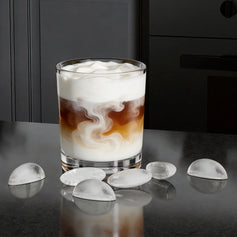
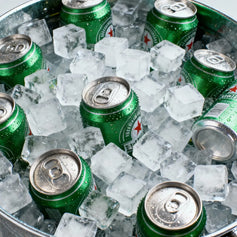
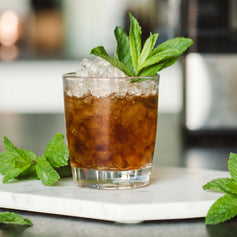
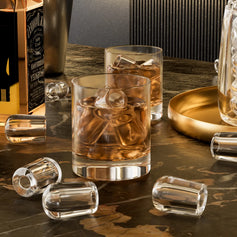


- Fall often changes where, when and why you use ice—not simply whether you use it.
- Daily cold drinks, Game Day refills and cocktail preparation create different patterns from filling a summer cooler.
- Freezer trays, an ice bucket or bagged ice may remain the most sensible answer for occasional use.
- Consider a dedicated ice maker only when the same routine creates repeated friction around access, refilling or the kind of ice you want.
Listen to an audio explainer
Fall Reveals What You Really Use Ice For
Summer can hide the difference between several kinds of ice demand.
A cookout cooler, an iced coffee before work and a cocktail mixed at a home bar all use ice. But they happen at different times, in different places and for different reasons.
Fall separates them.
The drink you make without checking the weather
Some people switch to hot coffee as soon as mornings turn cool. Others keep making the same iced drink because that is simply how they like it.
National Coffee Association data reflects both behaviors. Cold, iced and frozen blended coffee represented 31% of coffee consumed in its June 2025 survey, compared with 23% in January. Summer increased the share, but cold coffee did not disappear in winter.
A drink made five mornings a week is not a special occasion, even if each glass uses little ice. It is a routine.
The room you keep leaving during the game
The ice may be available in the main refrigerator. The problem is that the glasses, drinks and people are somewhere else.
One kitchen trip is trivial. A series of trips for the first round, refills and a fresh bucket feels different. You are no longer simply getting ice; you are repeatedly stepping away from the moment you prepared the room to enjoy.
That does not automatically justify another appliance. It does reveal that location can matter more than total volume.
The drink that uses ice twice
A finished fall cocktail may show one large cube, one sphere or a small amount of serving ice. It does not show the ice already used for shaking or stirring.
For someone who enjoys making drinks, ice is not merely background cooling. Texture, appearance and dilution become part of the ritual. The same applies to mocktails, iced tea and sparkling drinks when the experience in the glass matters.
The weekend when freezer ice is enough
Some households make a few cold drinks, host occasionally and rarely feel inconvenienced by their current supply.
That is not a problem waiting to be solved.
If refilling a tray before guests arrive and setting out an ice bucket covers the evening, a dedicated machine may introduce more cleaning and space commitment than the routine deserves.
You May Need Less Ice—and Better Access to It
Summer demand is easy to see: a packed cooler, an outdoor gathering or a long hot afternoon. Fall demand can be smaller but more repetitive—one coffee, one glass and one refill at a time.

| What changes | The practical question |
|---|---|
| Volume may fall | Is your current freezer supply already enough? |
| Location may shift | Is the ice where drinks are actually prepared? |
| Rhythm may become more regular | Does the same small task repeat every day or weekend? |
| Job may become more specific | Is ice cooling the drink, adding texture, controlling dilution or helping serve guests? |
Lower volume does not automatically eliminate friction. But inconvenience alone does not automatically justify a machine either.
The useful question is no longer only “How much ice do we use?” It is:
Where do we use it, how often does it happen, and what keeps interrupting the routine?
Before You Shop, Watch One Week of Drinks
One unusually busy Saturday can make any home feel under-equipped. It is a poor basis for deciding what you should own all year.
Instead, watch one ordinary week. No spreadsheet is required. Just notice four things:
- When: Is ice used every morning, a few evenings, only on football weekends or only when guests arrive?
- Where: Are drinks made in the kitchen, at a home bar, near the television or throughout the house?
- How: Does ice go only into the glass, or is it also used to shake, chill, serve, chew or refill?
- What feels like work: Running out, waiting, refilling a reservoir, moving finished ice, walking to another room—or maintaining equipment you barely use?

The last question keeps the exercise honest. Convenience is not only the work an appliance removes. It is also the work that appliance introduces.
What did your week reveal?
| Your pattern | What it probably means |
|---|---|
| Occasional | A little advance planning may solve the need. |
| Daily but manageable | Your freezer or countertop routine may still fit well. |
| Repeated and location-specific | Arrangement may matter more than maximum output. |
| Drink-specific | Choose the ice experience before choosing machine size. |
Now you have a habit pattern—not a product recommendation.
Freezer, Countertop or Undercounter: Match the Setup to the Habit
There is no universal upgrade path. A more permanent machine is only better when its ownership routine fits the home.

| If your fall pattern looks like this | Start here | Tradeoff to accept |
|---|---|---|
| A few drinks or occasional guests | Freezer trays, an ice bucket or bagged ice | Advance planning and a limited reserve |
| Regular use with flexible placement | Countertop ice maker | Counter space plus more active refilling, moving or monitoring |
| Repeated use in one finished drink area | Undercounter ice maker | Permanent space, utilities, cleaning and service access |
| A drink-specific ritual | Choose the ice type first | Texture, presentation or dilution may narrow the practical machines |
If you are choosing between the middle two paths, compare what countertop and undercounter ice makers feel like to own—not only what they can produce.
A countertop machine asks for less installation commitment but usually more active handling. An undercounter machine moves production off the counter and can place ice closer to a fixed drink area, but it becomes part of the room and its maintenance plan.
The simpler choice is not automatically temporary. The more permanent choice is not automatically more convenient.
When a Permanent Ice Station Earns Its Space
A dedicated undercounter ice maker begins to make sense when several conditions overlap:
- the habit continues during ordinary weeks, not only one event;
- drinks are repeatedly prepared in the same area;
- the current routine creates interruptions you genuinely want to remove;
- your preferred ice type matters enough to maintain dedicated equipment;
- the space supports the exact model's water, power, ventilation, clearance and drainage requirements.
If only one condition is true, wait. Fall itself can be the test period.
If several are true, first consider whether a 15-inch undercounter ice maker fits the habit. Then choose the next question that matches your routine.
Do you want nugget ice and cold drinks in the same place?
That is a co-location decision, not only an ice-production decision. Check whether the drinks you store, available space and required connections all fit before exploring a combined station. Start with this guide to planning nugget ice and drink storage together.
Do you lack a practical external drain?
Do not force a gravity-drain machine into an unsuitable location. Compare gravity, pump-assisted and drainless setups, then verify the exact requirements of the model you consider. Drainless describes the external drain requirement; it does not mean installation-free.
Does the ice itself shape the drink?
Choose texture, appearance and dilution before output. Soft nugget ice, firm crescent ice, bullet ice and clear ice serve different priorities. Use this guide to compare how nugget, crescent, bullet and clear ice behave in drinks and identify the experience you actually want.
Let Fall Show You Which Habit Lasts
Summer makes ice demand obvious. Fall makes the lasting pattern easier to see.
It may be the iced coffee you make regardless of temperature. It may be the ice bucket that keeps everyone near the game. It may be the pleasure of stirring a drink at the home bar. Or it may be only a few glasses a month—well within what your freezer already handles.
Any of those conclusions can be right.
The goal is not to preserve summer-level ice production through every season. It is to give the routines that remain a setup proportionate to their frequency, location and importance.
Before choosing equipment, ask one final question:
Which drink rituals were still here after the season changed?
Plan for those—not for the busiest afternoon of July.
FAQs
1. Do people still use ice in fall and winter?
Yes, but the pattern varies by household. Some people shift toward hot drinks or use less ice overall, while others continue daily iced coffee, sparkling water, soft drinks, mocktails or cocktails. The better planning signal is what repeats during an ordinary week—not the temperature alone.
2. How do I know if I need a dedicated ice maker?
Look for repeated friction: running out, waiting, refilling, moving ice between rooms or using an ice shape that does not fit the drink. If those problems appear only at an occasional party, freezer trays, an ice bucket or bagged ice may still be the more proportionate choice.
3. Is a countertop or undercounter ice maker better for fall?
Neither format is seasonally better. A countertop machine offers flexible placement with more active refilling and handling; an undercounter machine makes more sense when ice is used repeatedly in one finished drink area and the space can support its installation and maintenance requirements.


