




-
You don't need a dedicated room or expensive furniture. A corner of your kitchen counter is enough to start. The best home bar is the one you actually use.
- Most bar gadgets collect dust. You need 4 tools: a shaker, a jigger, a bar spoon, and a muddler. The 15-piece kits fall apart anyway.
- Start with 3 spirits, not 15. Whisky, white rum, and gin cover more cocktails than a full shelf of bottles you'll never touch.
- Ice is the most overlooked part of any home bar. It's the one thing that separates a setup that works from one that doesn't.
Listen to the article
I didn't know what I was doing when I set up my first home bar.
I just knew I wanted one. So I bought a kit, lined up some bottles, and figured that was enough.
It wasn't. First party I hosted, I spent half the night running back and forth to the kitchen, using a jigger that had already started rusting, with no fresh citrus in sight.
Then a friend came over, looked at my setup — a shaker, three bottles, a bag of ice — and shrugged. "What are you waiting for? Just make the drinks."
He wasn't wrong. I was overthinking it. I've been hosting with that simpler mindset ever since.
Here's what I learned — both from getting it wrong and from watching people who actually know what they're doing.

Where Should You Put Your Home Bar?
The mistake I see most often: people put the bar cart where it looks good. Corner of the dining room, all organized, bottles lined up.
Then they spend the whole night walking back and forth.
I did it too, at first. Now my bar lives on the kitchen counter, near the sink, where people already are. That one change made the biggest difference.
Three things to think about:
- Proximity to a sink. You'll rinse your shaker a dozen times in a night. Every step matters.
- Surface area. You need room to set down a shaker, a bottle, and three glasses at the same time. Storage comes second.
- Where people can see you. When guests watch you make the drink, it becomes part of the party. The cart in the corner is just isolation.
A shelf works. A sideboard works. A tray on a console table works. I've seen a great setup on a repurposed dresser.
The space matters less than the placement.
What Tools Do You Actually Need?
A bartender friend once told me: "You don't need much. A good shaker and a jigger cover most of it."
I didn't believe him. Bought the $15 Amazon kit. The tin jigger rusted after three washes. The strainer bent. Half the tools never left the box.
He was right. You need four things:
- A cobbler shaker — stainless steel, not glass. Glass breaks. Stainless gets knocked over and keeps going.
- A jigger — double-sided, 1 oz and 2 oz. I don't care how good you think your pour is. Use it every time. "I can eyeball it" is how you ruin a $40 bottle of whiskey.
- A bar spoon — the long-handled one. A regular spoon doesn't reach the bottom of a mixing glass. This one wraps around the ice without smashing it.
- A muddler — for crushing mint for mojitos, fruit for smashes, herbs for everything in between.
Add a fine-mesh strainer later if you get into citrus-heavy drinks. That's the whole kit. Everything else is nice-to-have.
What Spirits Should You Start With?
I've watched too many friends do what I did — buy the set. Whatever looks good on a shelf. Most of it sits untouched for months.
Three bottles. Pick the ones you actually drink.
The bartender I know puts it simply: "Beefeater, Havana Club 3 year, and Bulleit. That's your starter kit." Here's why those three work:
| Spirit | What it makes | The bartender's pick |
|---|---|---|
| London dry gin | Gin and tonic, martini, negroni, Tom Collins | Beefeater ($22) — Bombay works too, but Beefeater is the bartender standard |
| White rum | Mojito, daiquiri, rum and coke, piña colada | Havana Club 3 year ($20) — or Plantation 3 Star if you can't find it |
| Bourbon or rye | Old fashioned, whiskey sour, Manhattan | Bulleit Bourbon ($30) — high rye, holds up in mixers and tastes good neat |
With those three plus sweet vermouth (Cinzano or Dolin, $10-15) and Campari ($25), you can make twenty different cocktails. I counted.
Buy mid-shelf, not bottom shelf. Bottom-shelf spirits ruin a good cocktail. Mid-shelf ($25-40) is good enough to sip and cheap enough to mix.
And think about what your guests actually drink. I keep a bottle of vodka even though I never touch it myself — because half my friends do.
What About Mixers and Garnishes?
This is where most setups fall apart.
You can have the best spirits and tools on the counter. If you don't have fresh citrus and decent tonic, the drinks will taste flat.
- Fresh citrus. Fresh lemons and limes. Not bottled. This one change makes a bigger difference than upgrading your gin. I keep a bowl of them on the counter — if they're visible, I use them. If they're in the fridge, I forget.
- Simple syrup. Equal parts sugar and water, heated until dissolved. Costs pennies. Lasts weeks in the fridge.
- Tonic water. Get a decent brand. Cheap tonic makes good gin taste bad. Fever-Tree or Q — that's the floor, not the ceiling.
- Fresh mint. For mojitos, juleps, garnish. Grows on a windowsill. I kill every plant except this one.
- Angostura bitters. One $10 bottle lasts a year. A few dashes and suddenly your drink tastes like someone who knows what they're doing made it.
How Do You Handle Ice When Hosting?
This is the part nobody talks about — and the part that matters most.
Your refrigerator ice maker was designed for Tuesday. Not for a party of six.
Every host I've talked to has a version of this story. First party, ran out of ice before the second round. Spent the rest of the night apologizing.
Now I prep the night before. Empty the fridge ice bin into a cooler. Give it 12 hours to refill. And I buy a backup bag — even if I don't use it, knowing it's there removes the stress.
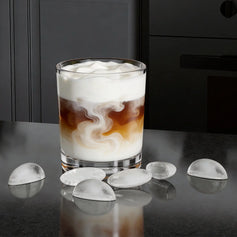
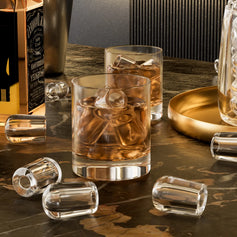
I also switched to large silicone cube molds for spirits. They melt slowly and don't water down a good negroni. Worth the $10.
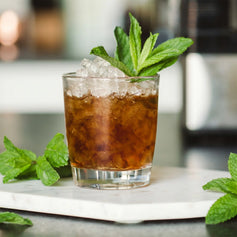
For everything else — mojitos, juleps, rum drinks — I want crushed or nugget ice. It chills faster and dilutes just enough.
I eventually caved and bought a countertop nugget ice maker. Sits on the corner of the counter, runs while I'm prepping, kicks out ice that stays crunchy instead of turning into a solid block. Should've done it years ago.
But even without one, the prep strategy alone changed everything.
How to Set Up Your Bar the Night Before a Party
The most important thing I learned: do everything before guests arrive.
Not during. Before.
Here's my checklist:
The night before:
- Wash and dry all glassware
- Cut citrus into wedges and wheels — store in airtight container in the fridge
- Make simple syrup if running low
- Fill ice bin + backup cooler
- Set up the three zones
The three-zone setup:
| Zone | What goes there | Why |
|---|---|---|
| Prep zone | Cutting board, citrus, muddler, mint | Closest to the sink — you'll rinse here most |
| Pour zone | Spirits, shaker, jigger, bar spoon | The middle — where you work |
| Serve zone | Empty glasses, garnishes, napkins | The edge nearest guests — kept clear |
One hour before:
- Chill glassware in the freezer (10 minutes makes every drink taste sharper)
- Fill a water pitcher — guests will ask for water, and having it ready saves you from stopping mid-shake
- Put out a bowl of nuts or olives — drinks hit different when there's something to snack on
When the first guest arrives, you're not scrambling. You're standing at a ready bar with a chilled glass in your hand. That's the whole point.
What I'd Tell Someone Starting Today
Start with what you have.
Don't wait for the right cabinet. Don't wait until you can afford the full set. A shaker, a jigger, three bottles, and a bag of ice on a counter is already a home bar.
Make drinks. See what your friends reach for. Add one bottle at a time.
The best home bar isn't the most expensive one. It's the one you actually use.
Not a review. Just what I figured out after too many parties where I was running back and forth to that bar cart in the corner. If you build something based on this guide, I'd love to see it — drop a comment below or tag me with your setup.
What to Make First: A Simple Daiquiri
You have rum, fresh limes, and simple syrup. That's a daiquiri. Not the frozen pink drink — the real one.
The recipe:
- 2 oz white rum (Havana Club or Plantation)
- 1 oz fresh lime juice (one lime, squeezed)
- ¾ oz simple syrup
Shake hard with ice for 12 seconds. Strain into a chilled coupe or small rocks glass. No garnish needed.
That's it. First time I made one, I couldn't believe I'd been buying $14 cocktails that taste worse. This one drink will teach you more about balance than any article will.
FAQs
1. How much does it cost to set up a basic home bar?
You can start for about $150. That covers a stainless steel shaker, a jigger, a bar spoon, a muddler, and three mid-shelf spirits. If you already have glasses and a counter to work on, that's all you need. The expensive setup comes later — and only if you want it.
2. What's the most common mistake people make when building a home bar?
Buying too much too fast. A 15-piece tool kit with tools you'll never use, eight bottles of spirits you don't drink, and glassware you're afraid to break. Start with four tools and three spirits. The rest can wait until you know what you actually make.
3. What's the one thing most people forget when setting up a home bar?
Ice. A refrigerator ice maker produces 3-4 pounds per day — enough for a few drinks, not a party. Prep a backup bag of ice the night before, or consider a countertop ice maker if you host regularly. Nothing kills a good cocktail night faster than warm drinks.


