





-
Your kitchen has two modes, and most people never switch. Winter mode is heat-centric (oven, stove, coffee). Summer mode is cold-centric (ice, drinks, chilled).
- The fridge takes the biggest hit in summer. Drink consumption doubles, fridge door opens constantly, cooling efficiency drops. A separate drink zone or cooler is the fix.
- Counter space needs seasonal reassignment. The coffee maker's prime spot might be better used by an ice maker in July.
- Your ice strategy needs a seasonal upgrade. Freezer trays work in winter. They don't cut it in summer. Block ice, a better ice maker, or both.
Listen to the article
Every June, I do something that sounds a little ridiculous but makes my summer noticeably better.
I switch my kitchen from winter mode to summer mode.
It's not a real thing you can buy. It's not an app setting. It's just — I walk through my kitchen and change how it works. I move things around. I change what's on the counter. I adjust how I think about the space.

A winter kitchen is designed around heat. The oven runs for hours. The stove gets daily use. The coffee maker has a permanent spot on the counter. Ice is an afterthought — a tray in the freezer that you refill when you remember.
A summer kitchen is the opposite. The oven barely gets touched. The stove is for quick morning things. Ice is not an afterthought — it's the most-used thing in the room. And the fridge door? It opens about twice as often as it does in January.
Here's what I change.
The First Thing That Changes: Your Fridge
This is the biggest difference between winter and summer kitchens, and most people don't notice it because it happens gradually.
- In winter, you open the fridge maybe 10-15 times a day. Grab milk for coffee. Get ingredients for dinner. Put leftovers away.
- In summer, that number doubles. Every kid who walks through the kitchen opens the fridge for a drink. Every adult does the same. Someone's making iced coffee. Someone else wants cold water. By 3pm, the fridge door has opened more times than it did in the entire morning of a winter day.
I noticed this a few years ago because my fridge started running louder in July. I looked it up. Turns out, every time you open the fridge door, cold air spills out and the compressor has to work to cool it back down. LG's official guidance says to lower the temperature by 1-2°C in summer just to compensate for the extra openings.
The fix isn't more cooling. It's less opening.
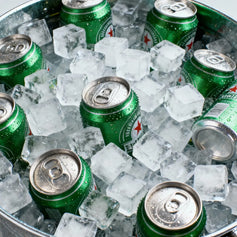
I started keeping a separate cooler on the counter with drinks for the day. Not a big one — just a medium cooler with ice packs and the day's water bottles, sodas, and juice boxes. No one opens the main fridge for a drink anymore. The compressor runs less. The fridge stays colder. And the kitchen feels less chaotic.
The Countertop Shuffle: Coffee Maker Goes, Ice Maker Comes
Every winter, my counter has a coffee maker, a toaster, and a kettle. That's the heat zone. It makes sense — those are cold-weather tools.
Every June, I ask myself: do I really need all three in the same spot right now?
The answer is usually no. The kettle gets put away. The toaster moves to a less prime spot. And in the freed-up space, I put something I need way more in summer: a dedicated ice source.
I started doing this after realizing my fridge's ice maker couldn't keep up. It makes about 3-4 trays worth of ice per day. In summer, that's gone by early afternoon. The alternative was either buying bagged ice every weekend or constantly refilling freezer trays — neither of which I wanted to do.
A countertop ice maker fits in about the same footprint as a Keurig. The Silonn and EUHOMY models that top most "best of" lists are roughly the same size. They make the first batch of ice in about 6 minutes. They keep producing all day.
So from June through August, the coffee maker gets a less central spot and the ice maker takes over.
Your Ice Plan Can't Be "Buy a Bag"
The biggest shift between winter and summer isn't about appliances. It's about mindset.
In winter, ice is a nice-to-have. You add a cube to your water. You put a few in a glass of Coke. If you run out, it's not a big deal.
In summer, ice is infrastructure. It's not optional. If you're hosting, if you're making iced coffee, if you want to stay hydrated — you need ice, and you need it consistently.
A standard 10-pound bag of ice lasts about 2-3 hours in a cooler in summer heat. After that, it's water. You can extend that with block ice (freeze water in loaf pans — they last 6-8 hours). But the real upgrade is having a continuous ice source that doesn't require a trip to the store. An undercounter ice maker on the counter or patio means anyone can refill their cup at any time — no one has to ask, no one has to go inside. That's the difference between a kitchen that handles summer and one that struggles through it.
This is the part I think about most when I do my June switch. Not the appliances. The mindset shift. In winter, I think about ice when I need it. In summer, I need to think about it before I need it.
The Whole Switch Takes About 30 Minutes
I'm not saying everyone needs to do this. But if you've ever wondered why your kitchen feels more chaotic in July than in January — it's not just the heat. It's that you're using a winter kitchen in summer.
The switch takes me about half an hour. Clear a counter spot. Set up a drink cooler. Check the ice situation. Put away the things I won't use for three months.
June 1 is my switch day. After that, I don't think about it again until September.
FAQs
1. How do I organize my kitchen for summer?
Start with the fridge: set up a separate drink zone so you're not opening the main fridge constantly. Then reassess your counter: put away appliances you won't use for three months and free up space for things you actually need in summer — like a dedicated ice source or a drink station.
2. Is a countertop ice maker worth it for summer?
Yes, if you use ice daily or host regularly. Most countertop models make their first batch in 6 minutes and produce about 26 pounds per day — enough to cover a household's summer ice needs. The key trade-off is counter space: about the same footprint as a coffee maker.
3. How much ice do I need for a summer party?
Plan on 4-5 pounds per person for a full-day event. A standard bagged ice cooler lasts 2-3 hours in summer heat. Block ice (frozen water in loaf pans) extends that to 6-8 hours. A continuous ice source — countertop or undercounter — eliminates the problem entirely.


