


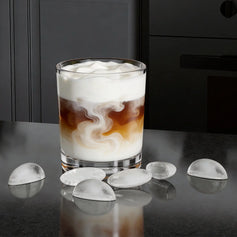

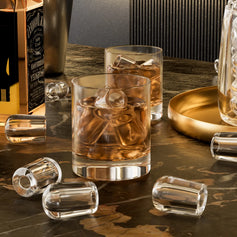


-
What's the deal with Sonic ice?
Nugget ice is porous, chewable, and engineered to participate in your drink instead of resist it. -
Why do people buy $3,000 nugget ice makers?
Because once you've experienced chewable ice, conventional ice feels like punishment. -
Who should actually buy one?
Host monthly gatherings, run a home bar, or live where ice consumption is... intense? Yes.
- Is this a regional thing? Absolutely. Sonic's 3,500 locations cluster in 15-20 states below the Mason-Dixon line.
Listen to an audio explainer

Why Sonic Drive-In Customers Obsess Over Ice
You know the type. The friend who pulls up to Sonic Drive-In and orders a drink. They'll spend $4 on 32 ounces of flavored syrup and carbonation just to access the nugget ice that restructures the entire beverage in real time.
This isn't casual consumption. This is infrastructure.
By 2024, Americans—particularly in the South and Midwest—are dropping $500 to $3,000 on standalone ice makers specifically engineered to produce Sonic-style nugget ice. These machines require dedicated water lines, drainage systems, and counter space the size of a dishwasher. People renovate kitchens around them. Entire Reddit communities exist. TikTok creators built followings on nothing but bite-and-crunch videos.
The real question: Why did a single ice texture become a lifestyle category?
The answer lives in the machine.

Scotsman's Nugget Ice Invention: From Hospital Problem to Consumer Obsession
Scotsman invented nugget ice in 1981. Not on purpose. They were solving a headache for hospital cafeterias: conventional ice was jamming the slush dispensers, and drainage pipes couldn't handle the runoff. The fix was radical—make ice porous. Air-filled. Compressible.
What happened next was serendipitous physics meeting human appetite.
Here's the actual engineering: Water freezes around ice crystals, but the machine compresses the frozen slush before it solidifies. You don't get a solid block. You get a hybrid—roughly 60% frozen water, 40% trapped air pockets. A crushed-ice cousin that's learned to hold its shape.
When you bite into it, you're not breaking ice. You're puncturing a balloon. Your teeth collapse the structure, not fracture it. The sensation is collaborative, not confrontational. Your brain registers "yield" instead of "resist."
Then the melting starts. Because the ice is porous, it floods inward at body temperature, cooling the drink from the inside as it disintegrates around the liquid. You're not drinking something cold. You're participating in a phase change.
Compare that to conventional ice: dense, indifferent, aggressive against your teeth. It sits in your drink like a frozen monument to the status quo.
Nugget ice cooperates.

How Sonic Drive-In Made Chewable Ice Part of American Car Culture
Sonic Drive-In didn't invent nugget ice. They just understood something crucial about American culture: we're obsessed with control.
Founded in 1954 as a drive-in burger stand, Sonic positioned itself as the anti-McDonald's—your car becomes the dining room, you decide when, where, and how. In the late 1990s, they swapped out conventional ice for Scotsman nugget systems across their entire chain. Not a small change. A fundamental repositioning.
Here's the insight: Nugget ice feels approachable. You can chew it without risking a cracked crown. It's not demanding respect—it's offering participation. By the bottom of your cup, the ice has fully dissolved into the drink, leaving behind a concentrate of flavor and texture.
This is experiential design. And America—particularly the South and Southwest—locked onto it hard.
Walk into a Sonic in Texas, Oklahoma, or Kentucky, and you'll see it: people ordering for the ice, not for the food. In the Northeast? If you even find a Sonic, the local sentiment is usually "What's that?" (There aren't many—Sonic's 3,500+ locations cluster heavily in 15-20 states, mostly below the Mason-Dixon line.)

The Home Nugget Ice Maker Boom: How 2020 Changed Everything
Around 2015, consumer versions of nugget ice machines hit the market. Scotsman, GE Café, Frigidaire. Price tags ranged from $500 to $4,000+. Not casual purchases. These are built-in installations.
Then 2020 happened. Lockdowns. People stuck at home. Sonic Drive-Ins were still open, but the ritual felt different—drive-through anonymity instead of a parking-lot experience.
And suddenly, the absence of nugget ice became intolerable.
Home appliance retailers saw the demand spike. Subreddits multiplied. People started recording their ice maker's output. Hours of footage. Of ice. Getting hundreds of thousands of views.
Why? Because nugget ice had stopped being a beverage optimization. It had become identity.
The person with the Nugget ice maker in their kitchen wasn't buying a cooling device. They were buying a piece of Sonic. A piece of summer. A piece of "I have my life together enough to maintain this."
(Spoiler: They didn't. But the fantasy was real.)
The Real Science: Why Chewable Ice Texture Matters More Than You Think
Humans aren't rational about texture. We're neurological.
Chewable ice triggers a different reward pathway than swallowing cold liquid. Your jaw, your teeth, your tongue—they all participate. The experience becomes active, not passive. And when you're not just receiving something, but actively engaging with it, your brain encodes the memory differently. Deeper. Stickier.
Sonic understood this in the 1990s. They weren't selling convenience. They were selling the sensation of co-creating the beverage experience.
By 2024, we've systematized the obsession. We've turned ice into an appliance category. We debate water filtration like constitutional lawyers. We've weaponized thermodynamics into lifestyle identity.
This is what happens when engineering meets appetite: the machine becomes the story.
The Hidden Costs (And Why You Might Not Need This)
Here's the part where honesty kicks in.
If you're thinking "I want a nugget ice maker," you need to understand what you're actually installing:
- Water line: Not a suggestion. This isn't a countertop gadget. Requires plumbing.
- Dedicated drain: The machine cycles water constantly. Runoff is mandatory infrastructure.
- Maintenance: Mineral deposits build faster than conventional machines because of the freeze-thaw cycle. Plan to descale every 6-12 months. Skip this, and your machine becomes a grinding, overworked door-closer that will break. (I've cursed at these machines too.)
- Noise: Compressor cycles all day. In a quiet kitchen, you'll hear it. In an apartment, your neighbors will hear it. They will resent you.
- Space: A built-in nugget machine is roughly dishwasher-sized. If your kitchen is tight, this is a genuine trade-off.
Not for you if:
- You host ice-dependent beverages fewer than once a week. (ROI is nonsensical.)
- You have extremely soft or distilled water. (The conductivity sensor gets confused and thinks the tank is empty.)
- You live in an apartment with thin walls or noise restrictions.
- Your water line is more than 25 feet from your kitchen.
The practical fix: Want nugget ice without the infrastructure? Order a reusable Sonic cup (the chain sells them). Or commit to monthly Sonic runs. Less romantic, same ice, zero maintenance fatigue.
But if you host regularly, run a home bar, or live in a climate where ice consumption is... let's call it intense... the machine makes sense. You're not paying for ice. You're paying for the ritual you've decided defines your summer.
Should You Buy a Nugget Ice Maker? The Honest Answer
This isn't about ice.
It's about the fact that nugget ice returns agency to the consumer. You're not receiving—you're choosing. You're not drinking—you're building the experience with every bite.
In a world where convenience means "do nothing," nugget ice offers something subversive: convenience that requires participation.
That's the real addiction.


