




TL;DR
The Ice Machine Revolution
The Ice Machine Revolution
-
Before 1850: Ice was harvested from frozen lakes and cost a day's wages in tropical markets—only the wealthy could afford daily ice.
- The Broke Inventor (1851): Dr. John Gorrie built the first ice machine to save yellow fever patients, but ice barons sabotaged him with smear campaigns. He died penniless.
- The Breakthrough (1873): German engineer Carl von Linde perfected compression refrigeration for breweries, turning ice from seasonal luxury into on-demand commodity.
- What Died: The ice trade collapsed. Refrigerated rail cars killed seasonal eating. Restaurants could store food for days, not hours.
- What Was Born: Modern grocery stores (strawberries in December), the soda fountain era, and reliable vaccine distribution—your childhood shots only worked because clinics could store them cold.
- The Texture Revolution (1980s): Scotsman Ice invented soft nugget ice for hospital patients. Sonic Drive-In made it a cult phenomenon—its porous structure acts as a "flavor sponge."
- Today: That countertop ice maker in your kitchen is the endpoint of 150 years of obsessive engineering. Pour yourself a drink. You're chewing on history.
Listen to an audio explainer
Before 1850, ice was harvested from frozen lakes and shipped in sawdust-packed boats. In tropical markets, a single block could cost what a laborer earned in a day. The ice machine didn't just cool drinks—it killed the ice barons, birthed the modern restaurant, and made your midnight snack possible. Here's how a forgotten invention rewired civilization.

The Ice Kings: When Frozen Water Was Currency
Picture Boston Harbor, 1840. Men with pickaxes cut massive blocks from Walden Pond. Each block weighs 300 pounds. They're packed in sawdust inside wooden ships bound for Calcutta, Havana, Rio. Up to half will melt before arrival, depending on the voyage. The rest sell for astronomical prices.
This was the ice trade. Frederic Tudor, "The Ice King," built an empire shipping New England winter to the tropics. Ice wasn't a commodity. It was alchemy. Hospitals couldn't store vaccines. Meat spoiled in hours. In tropical cities, a glass of iced lemonade was a status symbol reserved for the colonial elite.
Even in Boston, ice was expensive enough that only the wealthy iced their drinks daily. Working-class families might splurge for a block on special occasions—a wedding, a heatwave funeral—but daily ice? That was for people who didn't count pennies.
The hidden cost? Entire ecosystems. Sawdust polluted rivers. Lakes were stripped bare. And if winter was mild, scarcity hit. No ice meant no preserved food, no cooled medicine, no relief from summer heat.
The world ran on frozen lakes. Until a Florida doctor got angry.
The Revenge Machine: Dr. Gorrie's Obsession
1844, Apalachicola, Florida. Dr. John Gorrie watches another yellow fever patient die in sweltering heat. He knows cold air could save lives. But Florida has no ice, and shipments from up north arrive as expensive slush.
Gorrie doesn't accept this. He builds a machine.
Here's the visceral part: His contraption uses compressed air. Imagine squeezing a bike pump—the metal gets hot because you're cramming air molecules together. Now reverse it. Let that compressed air expand rapidly in a chamber. The molecules spread out, stealing heat from everything nearby. The chamber frosts over. Water freezes.
Gorrie patents the first ice-making machine in 1851. He tries to raise capital to build a factory.
This is where it falls apart. The ice barons see him as a threat. Frederic Tudor's network spreads rumors: "Artificial ice is impure. It'll poison your drinks." Newspapers controlled by ice trade money publish hit pieces. Potential investors read the headlines and back out.
Gorrie can't afford to build the factory alone. His machine works—it produces ice—but he can't scale it without capital. Banks won't loan to someone fighting an entrenched monopoly. By 1855, he's financially ruined. He dies broke in a rented room, thinking he failed.
He didn't. He lit the fuse. Within two decades, engineers across Europe will steal his core principle and make it work at industrial scale.
The German Engineer Who Broke the Monopoly
Carl von Linde, Munich, 1873. A brewery hires him to solve a problem: beer spoils in summer. Linde, a professor of engineering, designs a compression refrigeration cycle—a closed loop that sucks warmth out of water, like a fan in reverse, pulling heat away instead of blowing air.
The metaphor that matters: Linde's machine is a mechanical vampire. It bites into heat and drains it away. Refrigerant (ammonia, back then) circulates like blood: it evaporates (absorbing heat), gets compressed (releasing heat elsewhere), condenses back to liquid, and repeats. Forever.
By 1880, Linde machines are in meatpacking plants, dairies, and ice factories. The ice trade collapses. Frederic Tudor's empire melts. His sawdust-packed ships rot in harbor. The pickaxe men find new work.
What this meant for you: A butcher in Texas could hang beef for two weeks without it rotting. A dairy farmer in Wisconsin could ship butter to New York in July. Linde didn't just invent a machine—he killed distance as a food barrier.
Think about the last steak you grilled. The marbling, the tenderness—that comes from aging meat in refrigerated warehouses for 21-30 days. Before Linde's vampire machine, beef was eaten fresh or salted. The steakhouse as we know it didn't exist. Every ribeye you've ever ordered traces back to a German engineer who refused to let summer ruin beer.
The Societal Earthquake: What Ice Machines Actually Killed
This isn't just about refrigerators. Ice machines rewired human behavior.
-
The Death of "Seasonal Eating"
Before ice, you ate what grew nearby. Your great-great-grandparents never tasted a strawberry in December. Summer meant fresh produce. Winter meant root vegetables and salted meat. Ice machines enabled railcars with refrigerated compartments.
Now, strawberries in December. Salmon in Kansas. Blueberries from Chile in your February smoothie. The modern grocery store is a child of the ice machine.
That casual reach into the refrigerated aisle at Costco? That's Linde's vampire machine, still draining heat 150 years later. You don't marvel at it because it's invisible. But your grandparents would've wept at the sight of fresh asparagus in January.
-
The Birth of the Modern Restaurant
1900s: Restaurants can now store perishables for days, not hours. Menus explode in variety. The "$1 steak dinner" becomes viable because waste drops. Fine dining isn't just for the rich anymore.
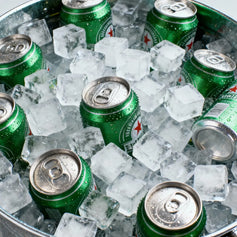
Ice also changed how we eat. Cold beverages become standard. The soda fountain—a fixture in every American drugstore by 1920—runs on ice machines. Coca-Cola's global empire is built on reliable cold.
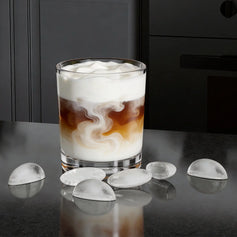
Think about the last time you ordered iced coffee at 9 AM. A century ago, that drink didn't exist—not because coffee or ice were unavailable, but because keeping ice past sunrise required a commercial icehouse. Your morning latte is a luxury your great-grandparents couldn't access. The barista handing you that cup? They're operating the endpoint of Linde's revolution.
-
Medicine Stops Being a Gamble
Vaccines need cold storage. Before ice machines, transporting polio or smallpox vaccines to rural areas was a death sentence for the doses. The vials would spoil in transit. Entire communities went unprotected.
By the 1950s, ice-equipped refrigerators in developing nations save millions. Rural clinics in Africa, Asia, Latin America—suddenly they can store lifesaving medicine for weeks instead of hours.
You lived this recently. When Pfizer's COVID vaccine required -70°F storage in late 2020, the world scrambled to build ultra-cold supply chains. Hospitals bought specialized freezers. Rural pharmacies panicked. That logistical nightmare? It would've been every vaccine, every time without the refrigeration revolution that started with Gorrie and Linde.
Your childhood vaccinations—measles, polio, whooping cough—were only possible because a Florida doctor refused to let yellow fever patients die in the heat.
The Quiet Revolution: Ice Comes Home
1920s: Companies like Kelvinator and Frigidaire release the first home refrigerators with ice trays. They cost $300-$500 (roughly $5,000-$8,000 today). Still a luxury. Only the wealthy buy them.
But here's the shift: Ice transitions from public commodity to private convenience. You don't visit the icehouse anymore. You twist a lever in your kitchen.
The hidden trade-off? Manual ice trays are miserable. You twist. You crack. You spill. If you have arthritis, you curse the engineer who designed them. This isn't a luxury—it's a hidden accessibility tax.
The automatic ice maker arrives in the 1950s with Servel's early prototypes, but it doesn't go mainstream until Frigidaire's 1965 model. Water fills a tray. A heating element briefly warms the mold—like greasing a pan before flipping a pancake—to break the molecular grip. Ice drops into a bin. You never touch it.
Fast forward: Countertop ice machines arrive in the 2000s. Portable. No installation. You plug it in, pour water, and 8 minutes later, you have nugget ice. The barrier between "commercial" and "home" collapses.
The Nugget Ice Era: Why Texture Became the New Frontier
1980s: Scotsman Ice invents the nugget ice machine for hospitals. Patients recovering from surgery can't chew hard cubes. Nugget ice—soft, porous, chewable—is easier to swallow and absorbs flavors.
Here's the sensory breakthrough: Nugget ice isn't just softer. Its porous structure is a flavor sponge. Pour sweet tea over it, and the liquid seeps into the ice's air pockets. Every bite is a flavor bomb. Hard cubes just dilute. Nugget ice integrates.
Sonic Drive-In notices. They make nugget ice their signature. Customers start ordering drinks "just for the ice." The ASMR crunch becomes a cult phenomenon. Reddit communities form around "the good ice." People start calling it "Sonic ice" or "the pellet ice" or simply "chewable ice."
By 2020, countertop nugget ice makers hit the consumer market. You don't need a commercial kitchen anymore. You just want that crunch.
What You Notice Now: The Ice Underneath Everything
Next time you open your freezer, pause. That automatic ice maker? It's a direct descendant of Dr. Gorrie's fever ward contraption and Linde's brewery vampire.
Every fast-food soda. Every hospital vaccine fridge. Every midnight snack you grab without thinking—it all runs on a 150-year-old thermodynamic trick: stealing heat until water forgets how to flow.
The ice machine didn't just cool things. It decentralized survival. It made food preservation a given, not a prayer. It turned hosting a summer barbecue from a logistical nightmare into a Saturday afternoon.
The deeper truth? We don't marvel at ice anymore because it's everywhere. But "everywhere" took a century of angry doctors, broke inventors, and German engineers who refused to let beer spoil.
The trade-off we don't talk about: Early refrigerants (CFCs) punched a hole in the ozone layer. Modern machines guzzle electricity. The convenience of midnight ice comes with a carbon cost. At Cotlin, we're obsessed with efficiency—not just because it saves your electric bill, but because Dr. Gorrie's fever dream shouldn't cook the planet. We use R290 refrigerant (propane-based, near-zero global warming potential) and insulation that keeps the compressor quiet and the energy draw low. The revolution shouldn't require burning the future.
Your nugget ice maker isn't a kitchen gadget. It's the endpoint of a revolution that killed ice barons, birthed modern cuisine, saved millions of lives, and made the phrase "I need ice" sound boring instead of desperate.


