




-
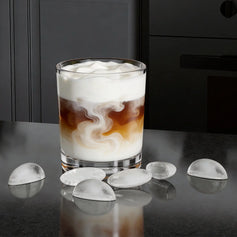
The Mystery: Ice survives for hours in a glass of water but melts into nothing in a glass of soda.
- The Myth: Your intuition says the acidity or the heavy syrup in the soda is "eating" the ice.
- The Physics: It's the bubbles. CO₂ bubbles rising to the top create a "micro-jacuzzi" effect (forced convection).
- The Naked Ice: In still water, ice builds a cozy, invisible blanket of cold meltwater around itself. In soda, violent carbonation constantly rips that blanket away, exposing the ice to warm liquid over and over again.
Listen to an audio explainer
You’ve definitely experienced this.
You pour yourself a glass of ice water before bed, and when you wake up the next morning, there are still a few defiant little ice cubes floating in the glass.
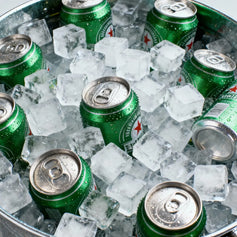
But when you hit the drive-thru, grab a massive cup of soda, and set it on your desk? That ice is fighting for its life. Within 30 minutes, your ice is completely gone, and you’re left drinking a lukewarm, watered-down tragedy.
Your gut tells you it’s a chemical reaction. You figure the intense sugar syrup or the harsh phosphoric acid in the soda is physically dissolving the ice.
But physics is a rebel—and the truth is much more chaotic. Your ice isn't being dissolved. It's being battered to death by bubbles.

The "Invisible Blanket" Theory
To understand why your soda is murdering your ice, we have to look at what happens when ice is just chilling in a regular glass of tap water.
When an ice cube sits in still water, it begins to melt. But as it melts, that newly melted, near-freezing water doesn't just immediately mix into the rest of the glass. It kind of hangs out right next to the ice cube.
In thermodynamics, this is called a stagnant boundary layer. Think of it as an invisible thermal sleeping bag. The ice surrounds itself with a protective aura of cold water, which insulates it from the warmer room-temperature water further out in the glass. Because the water is still, that cozy thermal blanket stays right in place, letting the ice survive for hours.
The Soda Sabotage: Forced Convection
Now, let's introduce soda.
Soda is fundamentally different from water because it is supersaturated with carbon dioxide ($CO_2$) under high pressure. The moment you pour it, that gas is looking for an escape route. The microscopic bumps and cracks on your ice cubes act as perfect "nucleation sites"—launching pads for the gas to turn into bubbles and violently fizz out.
This is where the murder happens.
As thousands of CO₂ bubbles rapidly form on the ice and shoot up to the surface, they create intense physical turbulence in the liquid. This isn't just a fun visual; it's a fluid dynamics nightmare for the ice. All those rising bubbles create a continuous, aggressive churning effect known as forced convection.
Every single bubble that rushes past the ice cube physically rips away that protective thermal blanket of cold meltwater.
The ice is left completely naked. Without its cold boundary layer, the bare ice is continuously exposed to the warmer, unchilled soda. The second it tries to build a new layer of cold water, another wave of bubbles violently strips it away.
The Universe in Your Cup: The Glacier Connection
If this sounds like extreme physics for a cup of Sprite, consider this: Your glass of soda is acting exactly like a melting tidewater glacier.
Scientists studying massive glaciers in the ocean found the exact same phenomenon. Glacial ice contains highly pressurized bubbles of ancient atmospheric air. When the glacier meets the warming ocean, these trapped bubbles undergo explosive decompression and burst into the water.
This violent mechanical bursting creates massive localized turbulence. Just like the carbonation in your soda, this turbulence strips away the thin, stagnant boundary layer of cold meltwater that usually protects the glacier. The bare glacial ice is then continuously exposed to warmer circulating ocean water, drastically accelerating its melting rate.
Whether it's a 200-foot wall of ice in the Arctic or a crescent cube in your cup holder, the laws of thermodynamics remain undefeated.
Conclusion
Next time you watch a handful of ice vanish in your cola while the ice in your water glass next to it sits there perfectly intact, you'll know the secret.
It’s not the acid. It’s not the sugar. It’s a violent, microscopic fluid-dynamics war between carbonation and boundary layers.


